


If you have prediabetes or diabetes, the focus is no different, you should try to stick to a healthy, balanced diet, eat moderate portions, at regular times. That will help control your blood sugar levels and your weight, which will ultimately reduce your risk of heart related diseases.1
Stay away from…





Moderate your portions!
Balance your diet!
Timing is important
Don't forget fibers and "good" fats
Let’s make things simple
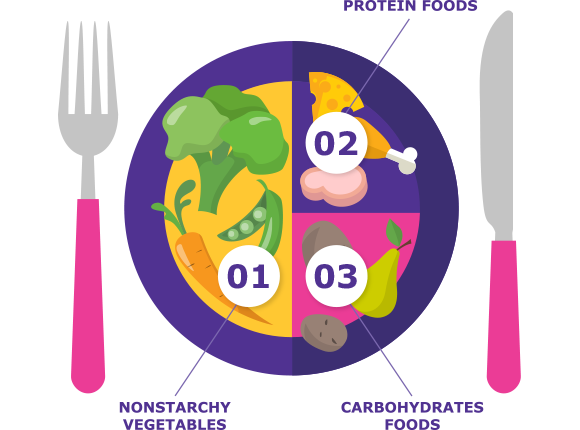
The American Diabetes Association has come up with a simple strategy to help you create balanced and healthy meals. They called it the Diabetes Plate Method and like the name shows, all you need is a simple plate (that shouldn´t be too big) to get started.3
Step 1
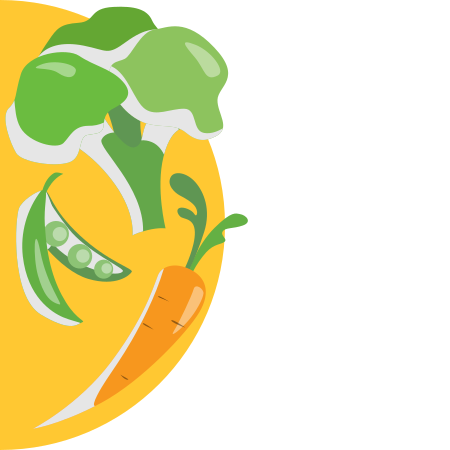
Fill half your plate with nonstarchy vegetables
This so-called superfoods are low in carbohydrates, but high in vitamins, minerals and fibers, making them the perfect base for every meal.
- Tomatoes
- Green beans
- Carrots
- Broccoli or cauliflower
- Lettuce or spinach

Step 2
Fill one quarter of your plate with lean proteins
This specific kind of protein has a lower fat percentage than other options that might increase your risk of heart disease, and therefore is a better option when it comes to put a plate together.
- Lentils, hummus, falafel
- Cheese, cottage cheese
- Fish, shellfish
- Chicken, turkey, eggs
- Lean beef

Step 3
Fill one quarter of your plate with carbohydrates
This group of foods have the greatest impact on your blood sugar levels (because carbohydrates break down into glucose), so it’s very important to choose them carefully and to make sure they only take ¼ of your plate.
- Starchy vegetables (eg. pumpkin)
- Whole grains (eg. quinoa)
- Fruit
- Yogurt
Step 4
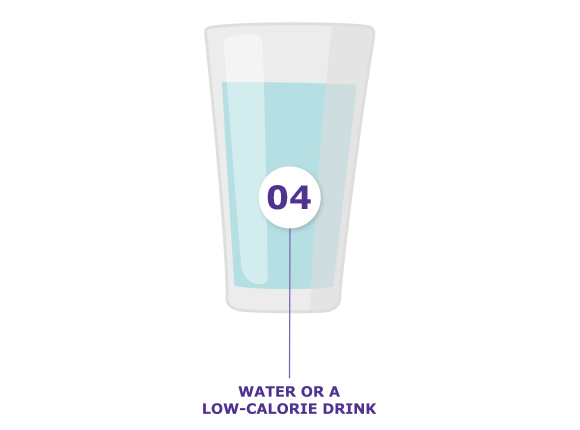
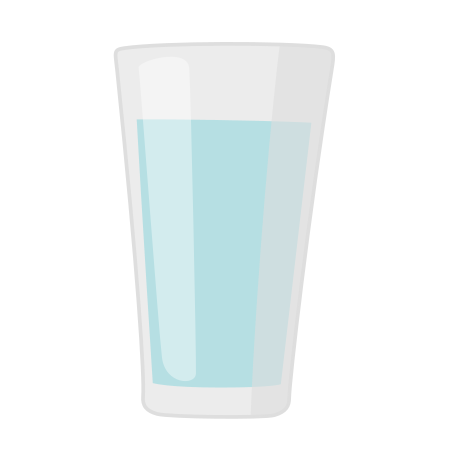
Choose water (or a low-calorie drink)
Water should always be the answer. It has no calories or carbohydrates so it will not affect your sugar imbalance. But here are some other options you can try:
- Tea (unsweetened)
- Coffee (unsweetened)
- Flavored water (unsweetened)
- Sparkling water

Keep count on those carbohydrates

Don’t think you can do this by yourself?
Learn more about reducing my risk

Learn more about diabetes and prediabetes

Take care of your mental health

Get enough sleep

Exercise daily

Manage the weight
- Mayo Clinic. Diabetes diet: Create your healthy-eating plan. Available at: https://www.mayoclinic.org/diseases-conditions/diabetes/in-depth/diabetes-diet/art-20044295 Accessed June 2022.
- Merck. Home Truths Report. 2021.
- ADA. Recipes & Nutrition. Available at: https://www.mayoclinic.org/diseases-conditions/diabetes/in-depth/diabetes-diet/art-20044295 Accessed June 2022.